
I love businesses that work quietly in the background and make sizable profits along the way.
Texas Pacific Land (NYSE: TPL) runs exactly that kind of business. It’s easy to overlook because it doesn’t scream for attention.
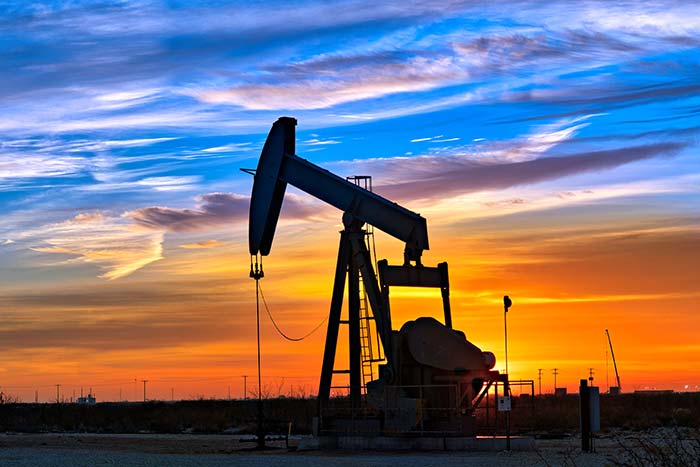
The company owns close to 900,000 acres in the Permian Basin, one of the world’s most productive oil regions. But it doesn’t drill for oil.
It gets paid when other companies use its land and resources, making money from oil and gas royalties, water sales, produced-water royalties, easements, and other surface uses, as well as land sales.
It’s a very profitable setup.
In 2025, revenue rose 13% to $798 million, up from about $706 million a year earlier. Adjusted EBITDA (earnings before interest, taxes, depreciation, and amortization) jumped 12.5% to $687 million.
That is a wide margin of about 86%.
Free cash flow was also strong at $498 million, or about 62% of revenue.
However, there’s another detail in this story that makes TPL unusual.
A large share of its land and royalty interests carries no value on the balance sheet. When the company − then structured as a land trust − received those assets in 1888, their fair market value was never determined.
As a result, the inherited land and royalty interests were assigned no book value, so a vast amount of TPL’s property barely shows up in its reported asset value.
That aside, what’s clear is that the company is rich in land and waist-deep in cash. It’s not surprising investors have been willing to pay a premium for its shares, including a spike of more than 60% from February to March.
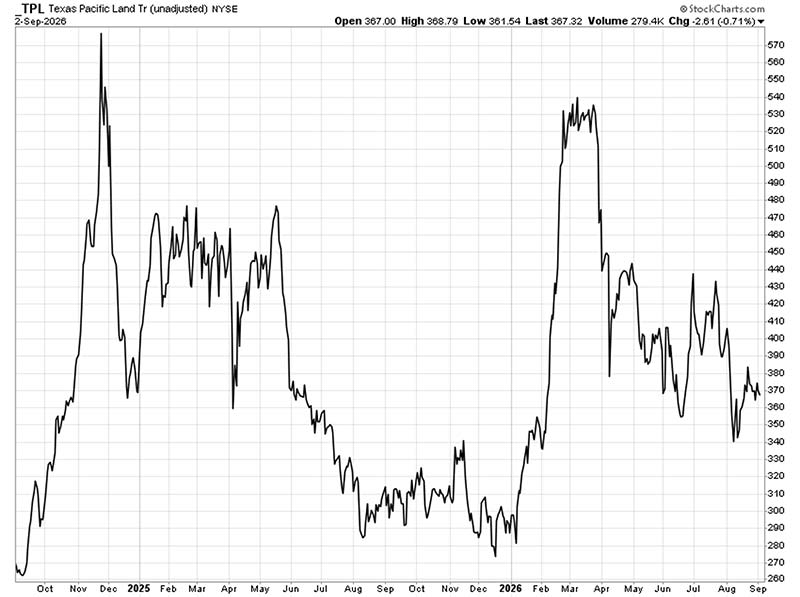
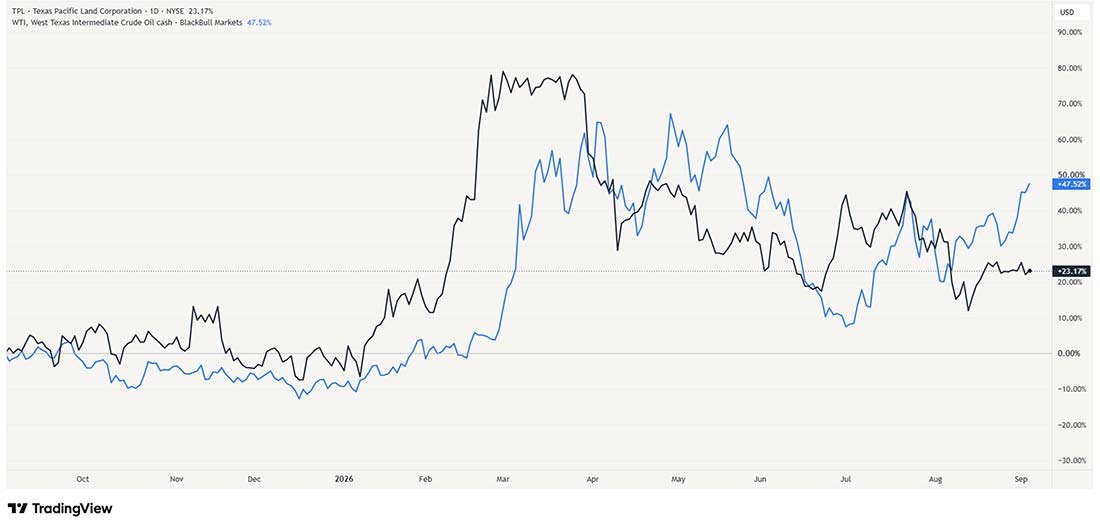
Some of its most recent volatility has closely followed the whiplash in crude oil prices.
What’s not clear, though, is how fairly TPL’s shares are being valued today.
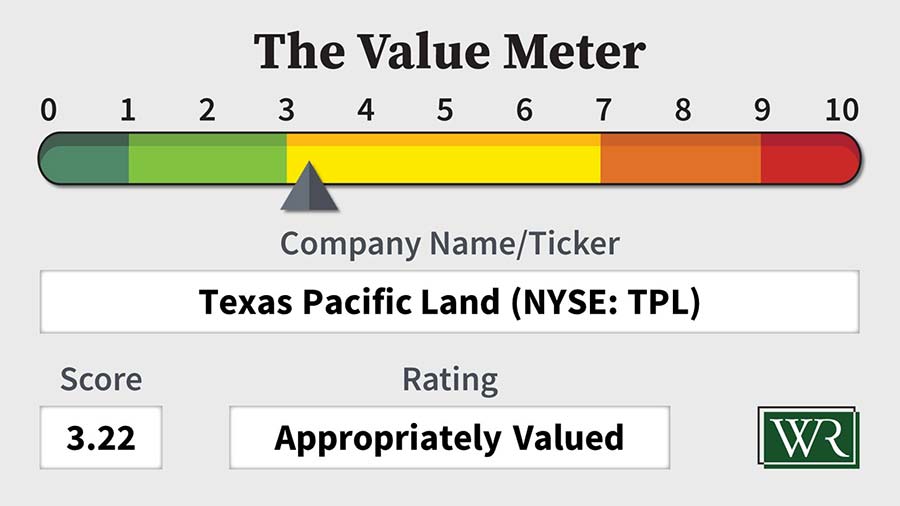
That’s where The Value Meter comes in.
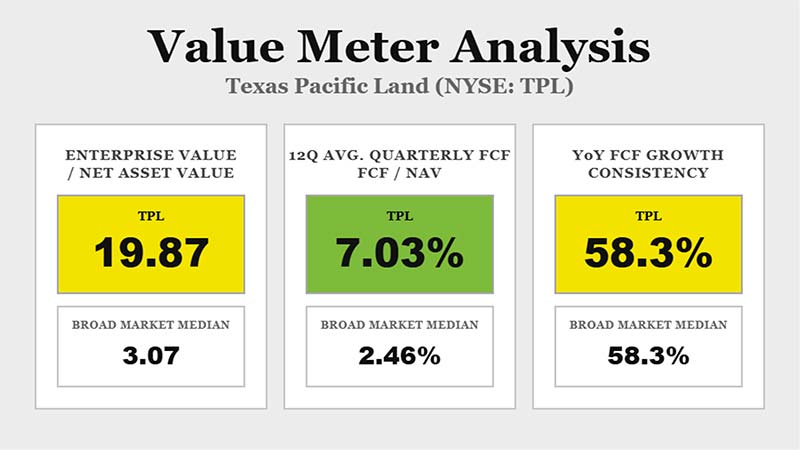
TPL’s enterprise value-to-net asset value (EV/NAV) ratio is 19.87 – more than six times the 3.07 median for the entire market. That looks like an enormous premium, but there’s a good reason for at least part of it.
The company’s 12-quarter average free cash flow-to-net asset value (FCF/NAV) is 7.03%, compared with a median of 2.46% across all stocks in our database. That tells us it has produced a lot of cash compared with its recent reported asset value.
There’s also the wrinkle I mentioned earlier about the company not assigning a value to much of its land. That makes its reported net asset value unusually low compared with the real assets it actually owns.
This is a situation where a lofty EV/NAV needs balanced context. Investors are paying a steep price relative to the assets recorded on the balance sheet, but what’s recorded does not reflect all of the inherited land and royalty interests.
Now, for all the cash coming into the company’s coffers, the consistency of that growth has been less remarkable. Its year-over-year cash flow growth consistency is 58.3%, the same as the broad-market median.
Clearly, Texas Pacific Land looks expensive on a simple asset comparison. But its strong cash generation and unusual balance sheet make the premium less troubling than it seems.
The business has earned that premium, and the stock looks to be reasonably priced − if not a slight bargain − at today’s valuation.
The Value Meter rates Texas Pacific Land as “Appropriately Valued.”
What stock would you like me to run through The Value Meter next? Post the ticker symbol(s) in the comments section below.
TLOFF please
Please review Trinity Capital TRIN
What about SWMR?
MSTR, AGI and or NFGC
Thank you!
PDI
what about PBT?
What is the appropriate value of DDD stock? A $3 range stock that may interest Elon Musk.
NVTS or SMCI
JEPQ Please