
“Remember that money is of a prolific generating nature. Money can beget money, and its offspring can beget more.”
– Benjamin Franklin
My ancestor Ben Franklin wrote the quote above in 1748, and I’ve never found a better description of how great fortunes behave. In the right hands, money reproduces.
The biggest companies in the world don’t get that way by standing still. They look at their empire, find the gaps, and buy whatever fills them.
Sometimes it’s a supplier. Sometimes it’s a technology that would take a decade to build. And sometimes it’s a rival that’s grown just dangerous enough that the smartest move isn’t to fight them…
It’s to own them.
Facebook did it with Instagram and WhatsApp… Google did it with Waze… Whirlpool did it with Maytag. The list goes on.
And the investors who can get positioned ahead of time could see extraordinary returns.
Think Like the Acquirer
But how exactly can investors target these opportunities?
Here are the three key questions I ask…
- Who just came into money? I don’t just mean that the company is profitable. They need to be flush with discretionary cash that must go somewhere.
- What’s missing? Trace the business from raw input to finished product. Whatever step the company doesn’t own is the missing link – and the opportunity.
- Who’s the primary target? At that point, it’s identifying the best candidate who either fills the gap or competes in the same space.
The key is to think like the acquirer, not the crowd.
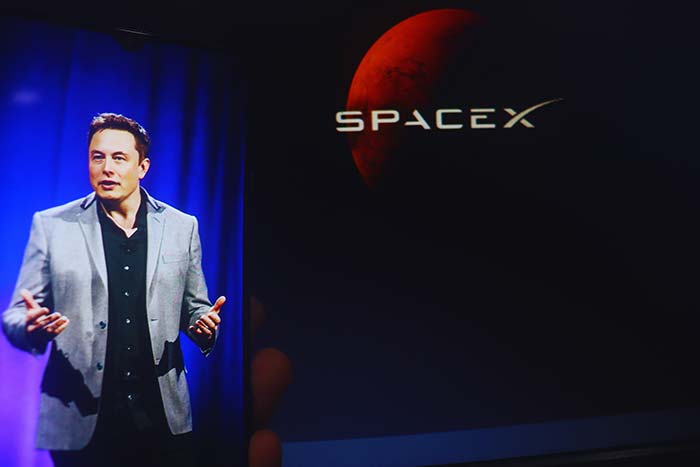
And we’ve seen this pattern play out again and again with Elon Musk…
When Giants Go Shopping
I was once at a private gathering of the world’s financial elite. And I was one of only two people who spoke with Musk directly.
What struck me wasn’t his intelligence. It was that he didn’t talk like a man who owned things…
He talked like a man who was assembling something.
You see, in 1999, Musk sold Zip2 and pocketed about $22 million. He rolled nearly all of it into the online bank that became PayPal.
When he got $175 million after selling PayPal to eBay, he didn’t diversify. He split it between rockets and electric cars. By 2008, he was borrowing from friends to make rent.
When he had far more money, he spent $44 billion on Twitter – a real-time data pipeline into 500 million minds – and folded it into xAI.
Windfall after windfall over 25 years… and not once has he taken the money and run.
So when SpaceX shares closed at $2.1 trillion on June 12, I didn’t wonder whether Musk would deploy it. I went straight to the second question…
Spotting the Gaps (and Threats)
When you start digging into Musk’s businesses, the first missing link you’ll notice is raw materials. Musk calls this Tesla’s biggest challenge.
He’s building dozens of Gigafactories. A single facility consumes an estimated 126,000 tons of graphite a year. Yet he doesn’t control that supply. China does.
Next up is computing power. Every rocket, satellite, vehicle, and AI model runs on it – and Musk is competing for capacity against his own rivals.
Then there’s communications. Starlink earned $11.4 billion in 2025 at margins above 60%. It carried every division of SpaceX that lost money. But there’s a competitor that may be getting Musk’s attention.
I’ve also found SpaceX’s most dangerous rival. The company’s chief executive said publicly that he can break SpaceX’s monopoly.
Musk is also dealing with a hard deadline. A Defense Department rule that takes effect January 1, 2027, restricts Chinese-origin rare earth material in qualifying weapons systems. Since SpaceX now launches national security missions, creating an American supply chain is a top priority.
Money Begets Money
Franklin was right that money begets money. He never said it happens evenly. It accrues to those who understand what a fortune is about to be spent on – before it’s spent.
The gaps in Musk’s empire are visible to anyone willing to trace the chain. Most of the companies that fill them are still small, still cheap, and absent from the financial news.
But that changes the day he decides to act.
That’s why I’ve prepared a full briefing on the companies I believe sit on Musk’s “hit list” and why they’re so crucial to his empire. I’ve also named the rival that’s an obvious acquisition target for Musk – ticker symbol and all.
I walk through all of it in my presentation.
Watch it here before Musk makes his move.
Good investing, AEIOU,
Dr. Mark Skousen
P.S. I was overwhelmed by the response to last week’s column, “AI: The God of This World.”
I was told it was one of the most well-received articles in The Oxford Club’s history!
One subscriber wrote, “This is one of the most grounded pieces I have ever read about life, investing, technology… and God. Thank you Dr. Skousen for being bold enough to write and share.”
For those who missed it or who want to read the comments, click here.