
Most investors know that Nvidia’s chips are driving the AI boom. What they may not know is that those chips don’t run by themselves.
They need servers, racks, networking, power, and cooling equipment before they can do any work. And Super Micro Computer (Nasdaq: SMCI), better known as Supermicro, builds the systems that turn high-end chips into working AI data centers.
It’s not as flashy as designing the chips themselves. But right now, business is booming.
In its fiscal fourth quarter, which ended in June, revenue reached $11.1 billion, up from $5.8 billion a year ago. Net income climbed to nearly $1.2 billion, up from just $195 million.
Margins improved too. Gross margin jumped to 17.5%, compared with 9.9% in the prior quarter. For the full fiscal year, revenue reached $39.1 billion, up 78% from the year before.
There’s plenty of demand behind those numbers.
Supermicro says it received more than $60 billion in new orders during the fourth quarter and entered the new fiscal year with record backlog. Management now expects between $65 billion and $72 billion in sales this year.
Shares closed below $24 in late July. This week, they’ve traded around $40. That’s a gain of roughly 70% in about two months.
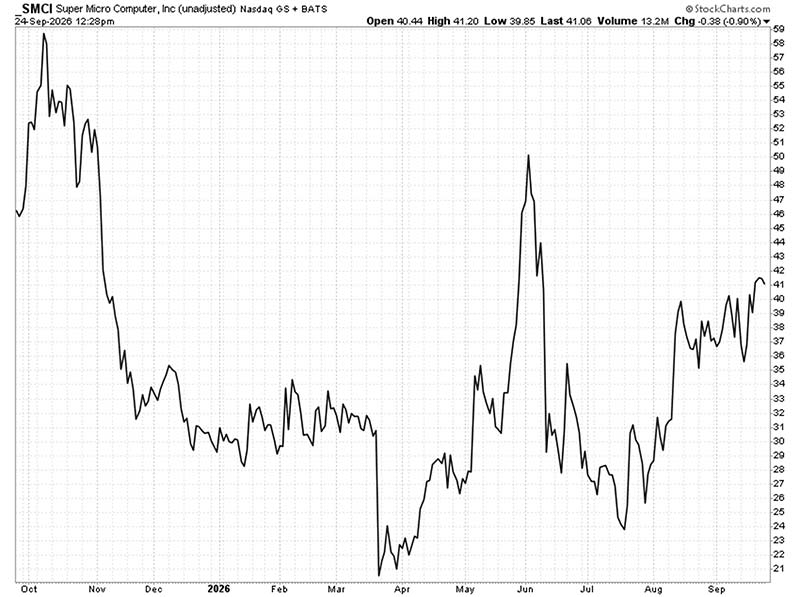
In July, Supermicro told investors that fourth quarter margins would come in far better than expected. It also disclosed the jump in orders. Shares surged nearly 20% the next trading day, then climbed another 19% after the company reported full results in August.
There is a real business story behind the move. The question is whether the stock has already been given too much credit for it.
Let’s run the stock through The Value Meter to find out.
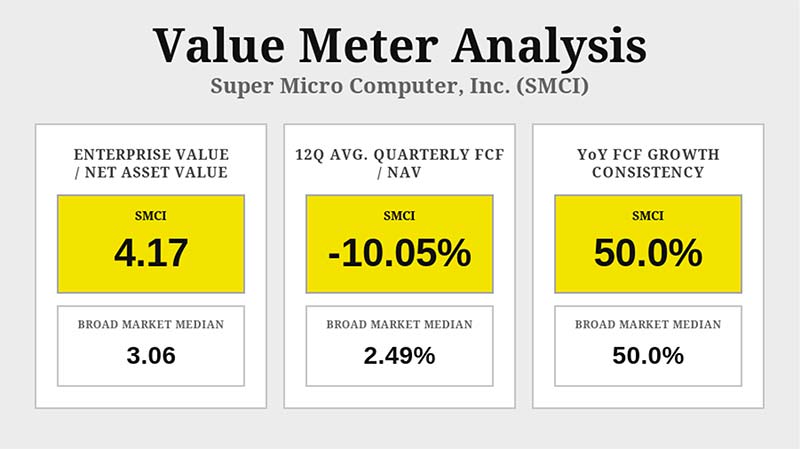
Supermicro’s enterprise value-to-net asset value ratio, or EV/NAV, is 4.17. The median stock in the Value Meter universe sits at 3.06. That’s a premium, but not an outrageous one.
The bigger problem shows up in cash flow.
Supermicro’s average quarterly free cash flow-to-net asset value, or FCF/NAV, is -10.05%, compared with 2.49% for the typical stock. This metric takes Supermicro’s average quarterly free cash flow over the past three years and compares it with its average net asset value over the latest two quarters.
This tells us whether a company’s assets are backed by a solid record of cash generation.
For Supermicro, they aren’t.
The company earned $2.2 billion last year but used $6.8 billion to operate the business, so its growth is soaking up a lot of cash. That matters because The Value Meter is not just asking whether sales and earnings are rising. It is asking whether that growth is turning into cash for shareholders.
So far, the answer is a clear no.
Lastly, Supermicro’s year-over-year free cash flow growth consistency is 50%, the same as the broad market’s. Free cash flow improved from the same quarter a year earlier only half the time.
That is an average cash flow record for a stock trading at an above-average valuation.
Of course, Supermicro is clearly benefiting from the AI buildout. Demand is strong. Revenue is surging. And the latest quarter showed a major improvement in margins.
This is not a bad company. Its growth is impressive. But until more of that growth turns into cash, the numbers do not support the price.
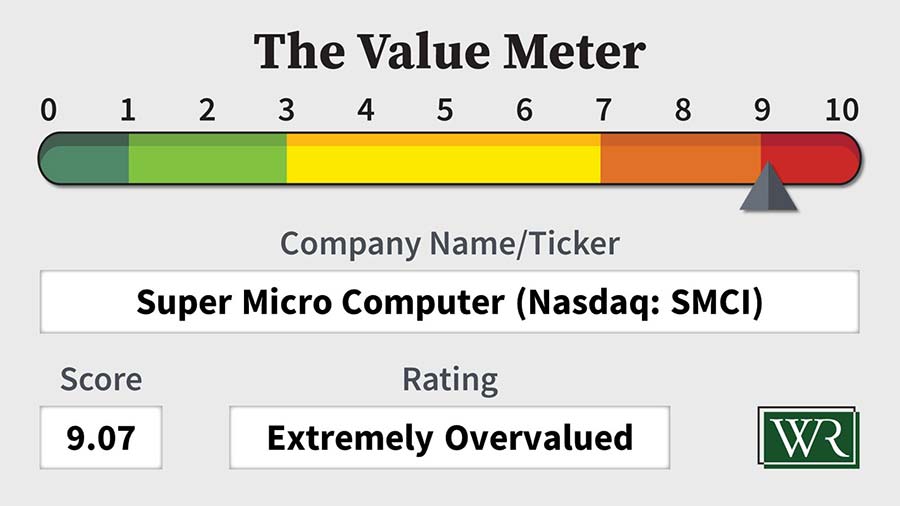
The Value Meter rates Super Micro Computer as “Extremely Overvalued.”
What stock would you like me to run through The Value Meter next? Post the ticker symbol(s) in the comments section below.