
“What is the greatest danger to your investments? Inflation.”
– Paul Cabot (The Maxims of Wall Street, Page 149)
Last month, The Economist ran a story titled, “How much will a 4th of July cookout cost this year?”
Across the 25 U.S. cities surveyed by the magazine, the “BBQ Index,” which consists of a hamburger, chips, a drink, and other “cookout staples,” cost an average of $81. That was 12% more than it cost a year ago, marking the fastest annual increase in a decade.
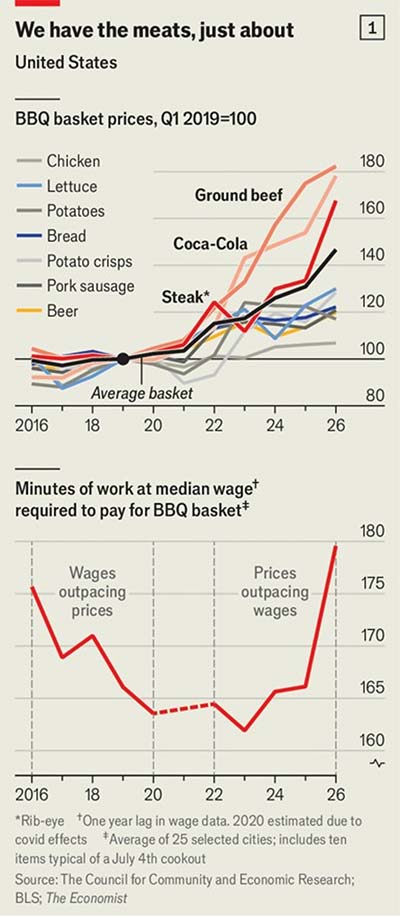
For those who rely on the consumer price index, which suggests that price inflation is only 3% a year, all I can say is, “Have you been to the grocery store or filled your tank with gasoline lately?”
The fact is higher wages have not kept up with the rising cost of living in the United States. President Trump’s two wars – tariffs and Iran – have only made matters worse.
As a result, virtually every survey shows the Democrats taking over the House − and perhaps even the Senate − in the midterm elections.
That’s not to say that the Democrats have a plan to bring down inflation. In fact, their socialist policies will make things worse. The vote in November will simply be a “negative” vote against the party in power.
We’ve Entered an Era of Permanent Inflation
Subscribers should never forget that since World War II, the United States has been in an era of permanent inflation. See the chart below.
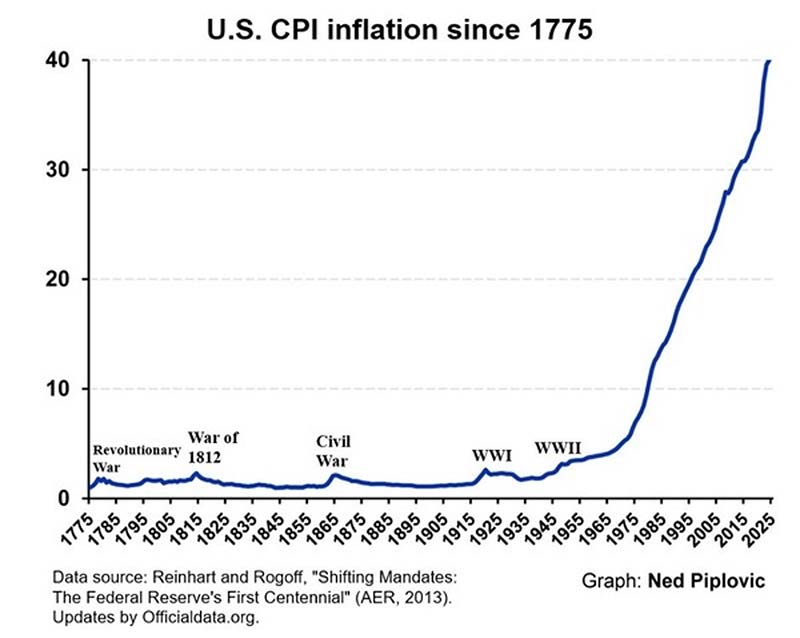
Before World War II, inflation was temporary and caused by wars. After the wars ended, prices came back down. For most of our history, the U.S. suffered no long-term inflation.
But that all changed in the 20th century, due to a variety of new factors:
- Never-ending wars
- The creation of the Federal Reserve (“the engine of inflation”)
- Going off the gold standard (twice, in 1933 and again in 1971)
- Adopting Keynesian economics and chronic deficit spending
- The Bretton Woods Agreement in 1944, which made the fiat dollar the world currency.
There is no real discipline anymore when it comes to protecting the value of the dollar.
Even the Fed has given up on ending inflation. Despite its mandate to maintain full employment and “price stability,” the central bank has thrown in the towel and set an inflation target of a 2% annual increase. (And even that has been elusory.)
Perhaps that will change under new Fed Chairman Kevin Warsh, but I doubt the Fed will keep inflation below 2%, given the inflationary pressures in today’s government policies and the growing national debt.
The Increasing Tax Burden
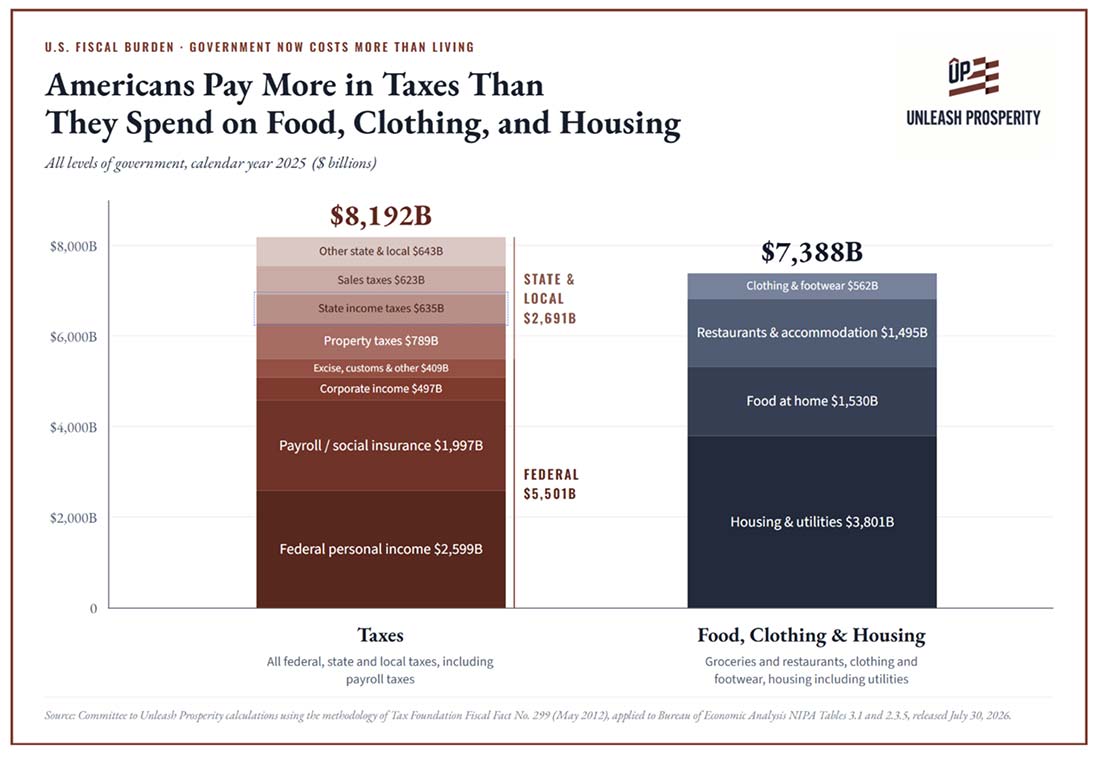
The CPI has another flaw: It does not include all of the taxes we pay, such as the income and capital gains taxes. Thus, the CPI is not an accurate measure of the true cost of living.
Last week, the Unleash Prosperity Hotline newsletter showed that for the first time, “Americans pay more in taxes than they spend on food, clothing, and housing” (and this despite the Trump tax cut).
For readers of Wealthy Retirement and Members of The Oxford Club, the conclusion is clear: You need to earn more than 10% a year just to keep up with inflation. Stocks and gold have done a good job of keeping up, and our recommendations at The Oxford Club have helped many of our subscribers do even better!
I have no doubt what our Founding Fathers would say about the burden of taxes placed on our shoulders. D.C.politicians are as addicted to spending and wasting money as crack addicts are to their “fix”. This Nation is no more immune to the consequences of history than were the Weimar Republic and Zimbabwe.
from what I can see there is effort to redefine what official measures of inflation are – with expectations being that the result will be lower. This will reduce indexing for pensions etc — and will let the government claim success – but as you note does not square with on the ground reality. How does this get rationalized without total loss of credibility