
I’m reading a biography of Ty Cobb, one of the greatest baseball players who ever lived.
He excelled during what was known as the “dead ball era,” when 11 home runs would lead the league.
Cobb was not a home run hitter. He prided himself on getting on base, stealing a bag or two, and scoring runs.
His career batting average was an insane .366. In his 24-year career, he batted under .300 once, and that was in his first year in the big leagues.
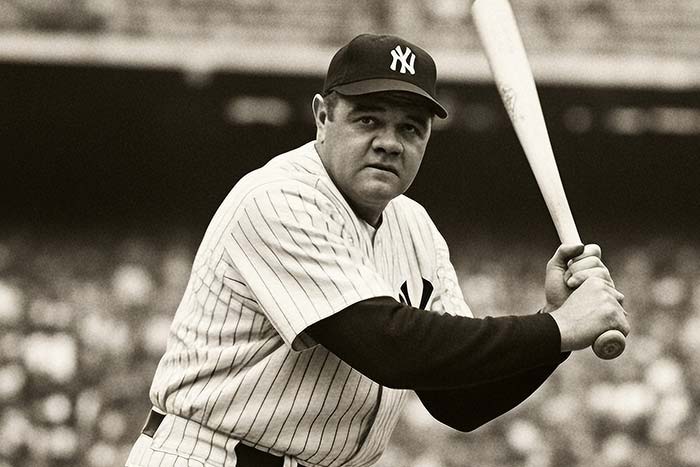
Cobb was by far the biggest name in the game − until Babe Ruth came along. In 1919, Cobb’s 15th season, the Babe hit 29 home runs. Incredibly, he hit 54 and 59 home runs over the following two years, completely changing the sport.
Babe Ruth became as big a celebrity as there ever was.
He was a terrific hitter who smacked a lot of home runs. He also struck out 1,330 times. Cobb heard “Strike three!” only half that amount, despite having around 3,000 more at bats.
As an investor, I’m more like Ty Cobb than Babe Ruth.
Don’t get me wrong. I’ll swing for the fences occasionally, and it feels amazing when I connect. Just last month, I recommended an option trade on Merck (NYSE: MRK) that more than tripled for a 204% win in just a month and a half.
But to consistently score in the investing game, you need to be on the bases. Sitting on the bench after a strikeout doesn’t help your team.
We discussed this topic last Friday in my Weekly Income Alert broadcast, though I didn’t use the baseball analogy.
Some folks were focused on how much they could make.
The Weekly Income Alert strategy had been white-hot for a while, having won on 16 out of 17 trades, and several people noted that they’d recently increased their position size.
Of course, that’s when we took some losses.
There’s nothing wrong with pressing your bets when things are going good − as long as you are also considering what happens when they’re not.
When many people invest, they think about how much money they’re going to make. That’s important, because investing involves risk and you should be compensated for taking that risk.
It’s why a riskier penny stock or option has much more upside potential than a Treasury bond.
But when the upside is all you think about, that’s where trouble starts.
I’ve been an investor and trader for more than 30 years. I’ve learned a lot of lessons along the way, and one of the most important is to protect my downside.
Whether I’m buying a dividend growth stock for the long term or speculating on an option that I expect to hold for less than a week, I think about what happens if I’m wrong. Really wrong.
If the stock or option suddenly tanks, I consider how much I would lose and how much I am willing to risk on the trade. Then I position myself accordingly.
Here’s what I mean.
Let’s say I buy a stock for the long term. The Oxford Club recommends investing no more than 4% of your portfolio in any one stock. We also recommend 25% trailing stops on most stock positions so that if you do get stopped out, the overall loss is only 1%.
If my portfolio is $100,000, that would mean a $1,000 loss. If the stock were trading at $100 per share, I’d only buy 40 shares, because 4% of my portfolio would be $4,000. A 25% drop would result in a loss of $1,000.
Perhaps I have some bills coming up and I can’t lose more than $500. In that case, I’d only buy 20 shares.
I’m not thinking about how much I’ll make if the stock goes up. I’m thinking about how much pain I can handle if it goes down.
The wins will take care of themselves. If you have a good strategy for trading and investing, the profits will pile up. It’s your job to keep them by managing your risk.
That doesn’t mean not taking risk. It means managing it so you never get in a position where you’re sitting on the bench when your team needs you.
The long ball gets all the glory, as this classic Nike commercial pointed out.
But often, the big hitters flame out.
Think of Mark McGwire, who broke Major League Baseball’s home run record in 1998 but retired due to injuries and performance issues just three years later.
In the investing world, there’s Leopold Aschenbrenner, whose Situational Awareness fund bet big on AI with huge leverage. He lost tens of billions for his investors and himself this year because he was only thinking about how much he could make, not what he could lose.
I like Warren Buffett’s strategy better: buying great businesses at fair prices and letting time and compounding work their magic.
Buffett is considered the greatest investor of all time. Like me, he’s more Ty Cobb than Babe Ruth, as he was focused on preservation of capital as much as he was on profits.
To rip off another famous sports commercial… be like Ty and Warren.
Thank you so much for leading us in this strategy. This is why I chose to follow your investing program. I’m not interested in hype, I want “meat and potatoes ” as I like to call it