

A data center full of AI chips is worth little if it cannot get electricity.
That is the problem Bloom Energy (NYSE: BE) wants to solve. Its fuel cells turn fuels such as natural gas into power at the customer’s site. That means the data center doesn’t have to wait for every part of a new grid connection to be built.
The speed is real. Bloom says it delivered a working power system to Oracle in just 55 days last year. Oracle has since signed an agreement for far more of its equipment.
Bloom is no longer selling only a promise. In the second quarter, sales passed $1 billion for the first time. In the third, revenue reached $1.24 billion, up 138% from a year earlier. Operating profit rose from less than $8 million to $225 million.
It is easy to see why investors are excited. AI companies need power now, and Bloom has a product that can help them get it. But selling more equipment is only part of the test. Bloom must also turn those sales into cash.
That was harder in the third quarter.
Despite the jump in profit, Bloom used more than $27 million in operating cash. It also spent about $153 million on plants and equipment. So free cash flow – the cash left after those investments – was negative by about $181 million.
Much of that pressure is a result of how fast the business is growing. Still, investors have already placed a high price on what comes next.
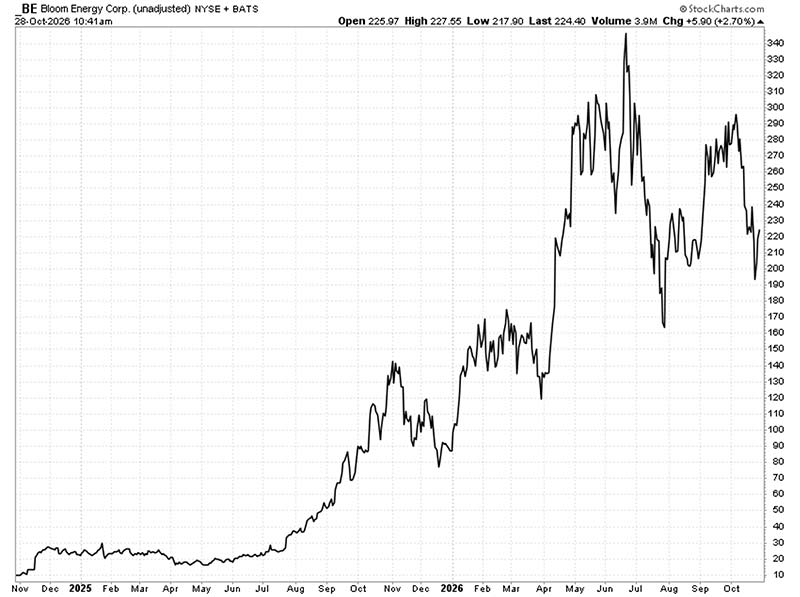
Bloom’s shares climbed from around $20 in early 2025 to more than $340 this summer. Even after pulling back to about $220 this week, the stock remains far above where it stood less than two years ago.
The optimism behind Bloom’s stock is clear. But has the business earned that confidence, or has the stock price run ahead of the evidence?
That’s where The Value Meter comes in.
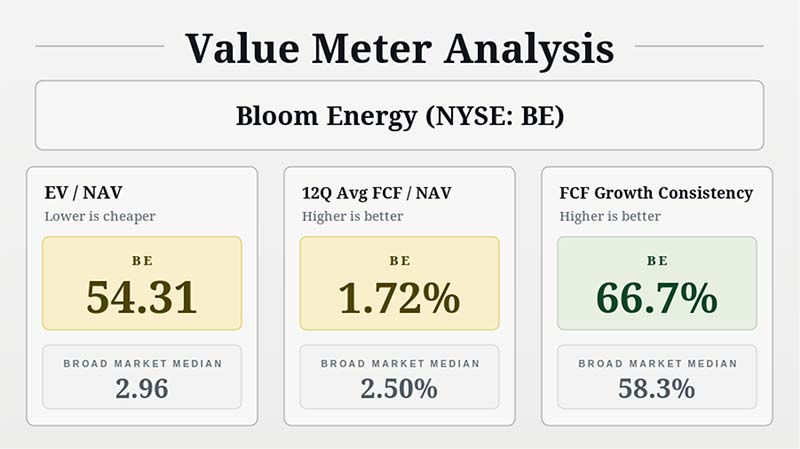
Bloom’s enterprise value is 54.31 times its net asset value, or NAV, which is the value of its assets after subtracting its liabilities. The median stock in our universe stands at 2.96, while the median stock in the industrials sector is at 3.50.
Bloom’s technology and customer ties may be worth much more than the assets shown on its books. But that is an extremely steep premium.
Over the past three years, Bloom’s average quarterly free cash flow was equal to just 1.72% of its average NAV. The universe median was 2.50%, and the industrials median was 2.95%.
Bloom does have a better growth trend. Its free cash flow improved year over year in eight of the last 12 quarters for a rate of 66.7%, against 58.3% for both the universe and its sector.
The business is gaining ground, but its long-run cash generation has yet to match the price investors are paying.
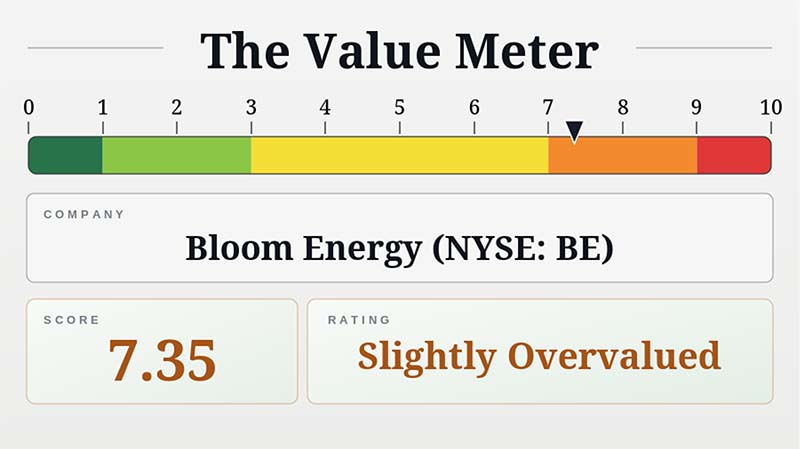
I’d say there’s a bit too much euphoria baked into the current price on this one, and my model agrees.
The Value Meter rates Bloom Energy as “Slightly Overvalued.”
What stock would you like me to run through The Value Meter next? Post the ticker symbol(s) in the comments section below.