

“It is incredible the quantity of good that may be done in a country by a single man who will make a business of it.”
– Benjamin Franklin
Jeff Bezos, the founder and former CEO of Amazon, recently made a dramatic statement. He said, “If I do my job right, the value to society and civilization from my for-profit companies will be much, much larger than the good that I do with my charitable giving.”
His statement reminded me of Oracle co-founder Larry Ellison’s response years ago when he was asked if he should run for governor of California or another public office. He said, “It is not very popular to think that commerce is more important than politics, but it is. It is not very popular to think that Ford Motor Company did more to help humanity than the Ford Foundation ever did, but it did.”
Ellison decided to follow Ford’s example and stay out of politics.
Ford’s Revolutionary $5-a-Day Story
Indeed, Henry Ford’s decision to more than double the wages of his workers in January 1914 reversed forever the bad image of business. The Ford $5-a-day story destroyed Marxism, which blamed capitalism for exploitation and alienation, once and for all.
Ford shared the profits with his workers so that, for the first time, they could afford to buy the product they were building, the Model T.
Ever since then, Marxists have hated the company because it destroyed workers’ revolutionary zeal. They call the company’s approach “Fordism.”
Who Funds Government and Nonprofits?
We often say that taxpayers fund government and charitable organizations. But really, it’s successful, profitable businesses that directly or indirectly fund all the other vital organizations in the world.
As philanthropist and Alibaba co-founder Jack Ma once stated, “I tell the government, if people have no jobs, you are in trouble. Government will be in trouble. My job is to help more people have jobs.”
Good-paying jobs provide the wages and salaries that allow taxpayers to pay their taxes and give generously to their favorite charities or nonprofits.
In sum, it is business that generates the jobs, income, and taxes that keep a country going.
The late great management guru Peter Drucker contended that the large corporation – not the state, the church, universities, or nonprofit organizations – is the “ideal non-revolutionary social welfare institution” to provide retirement income, medical and life insurance, advanced education and training, paid vacations, and other benefits.
Drucker was also quick to point out that government is a lousy business and is more likely to create problems than solve them, whether dealing with retirement, medical coverage, or welfare.
Gallup has found that a top determinant of happiness is a “good job.” That makes sense since most adults spend most of their waking hours working and developing their closest relationships at their jobs. And what’s the No. 1 source of satisfying employment? Private business.
John Mackey, the former CEO of Whole Foods Market, contends in his book Conscious Capitalism that the commercial society, the voluntary shared passion of individuals, “can create a world in which all people live lives full of purpose, love, and creativity – a world of compassion, freedom, and prosperity.”
What I Tell College Graduates
When I meet with students who are graduating and looking for jobs, I encourage them to work in the private sector first, before they go into politics or work for a nonprofit.
By working in business, they will be part of the engine of prosperity, the catalyst of higher living standards.
I also tell them, “If you want to get ahead in business, find a job with a company with high profit margins. The more profits a company makes, the more likely they are to start you off at a higher salary, and the more likely they are to give you a raise.”
Economic studies show that companies with higher profit margins tend to pay their workers more. One influential study indicated that differences in pay between workers are increasingly explained by what firm they work for, not just their individual skills. Highly productive and profitable firms tend to pay a wage premium.
Technology companies such as Oracle, Microsoft, and Apple have profits in the double-digit range and compensate their workers with higher pay and profit-sharing plans.
Meanwhile, grocery stores, restaurants, and other retail outlets tend to have low profit margins and consequently pay their workers relatively low wages.
It’s a real eye-opener for college seniors who are looking for a job.
How the Economy Really Works
When I teach economics, whether at Columbia Business School or Chapman University, I focus on the vital role of business first and foremost.
In my book Economic Logic, now in its sixth edition, I do something no other economics textbook does: I start with the profit and loss statement!
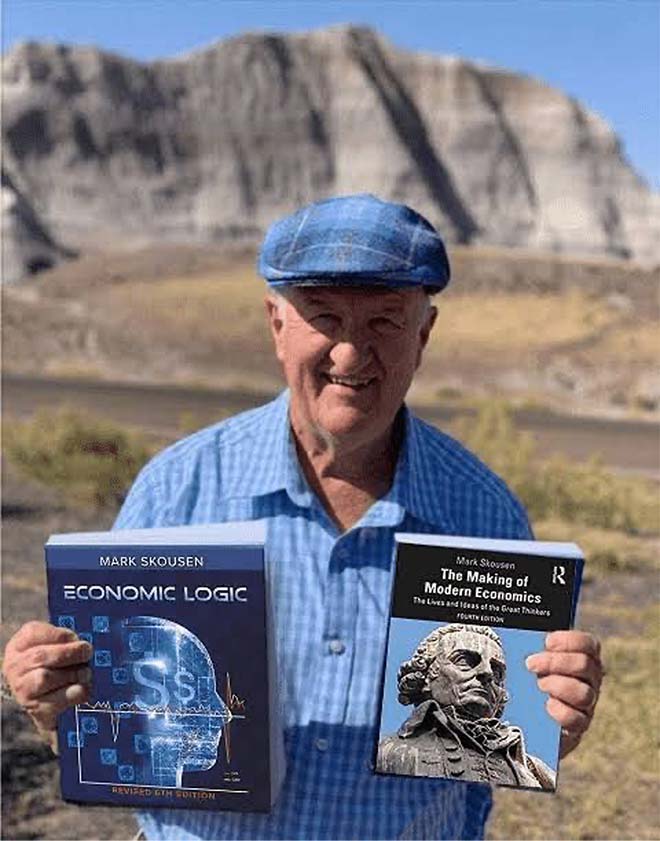
It’s better than supply and demand diagrams because it shows the dynamics and the creative disruption that are integral to the economy. It shows why businesses are constantly increasing the quantity, quality, and variety of goods and services.
I highlight the “stakeholder” philosophy advocated by John Mackey and other free-market business leaders, where all sides of business win – executives, workers, suppliers, and consumers.
I conclude with this great quote from Shlomo Maital, a former MIT managerial professor: “The health and wealth of a large number of individual businesses – small, medium, and large – determine the economic health and wealth of a nation. It is business that creates wealth, not countries or governments. It is business that decides how well or poorly we are doing.”
Economic Logic is different from any other economics textbook out there. It’s based on my years of experience in business. It includes the contributions of many non-economists, such as Peter Drucker, W. Edwards Deming, and Harry Markowitz, in addition to the economic contributions of Adam Smith, Ludwig von Mises, and Milton Friedman.
Here is what others have said about the book…
“Mark Skousen is America’s leading economic author because he roots his luminous books in the real world… He is the Hayek of our era.” – George Gilder
“Eureka! Skousen has done the impossible. Students love it! I will never use another textbook again.” – Harry Veryser, University of Detroit-Mercy
“Ground breaking… Gave me a profound new understanding of real-world economics and personal finance… [It’s] easy to read without any need for math.” – Amazon review
Economic Logic is 500 pages long and available at a discounted price of only $44 at skousenbooks.com. I autograph all copies and ship them within the U.S. for no additional charge.
The Highlight of the Year!
The world’s top business leaders (including Steve Forbes, John Mackey, and Alexander McCobin of Principled Business) will be joining me at this week’s big show, FreedomFest in Las Vegas, where over 1,500 attendees will celebrate the 250th anniversary of our nation’s founding.
I hope to see some of you there!